
“Now faith is the substance of things hoped for, the evidence of things not seen” (Heb. 11:1)
 What is faith, and how do you define the word? To understand the fulness of this word, we must go back to its origin. If we do not understand the scriptural definition of faith, we can be led astray by modern interpretations and perhaps errantly accept a re-defining of the word.
If faith comes by hearing and hearing by the Word of God (Rom.10:17), then we can not let un-scriptual, lawless definitions weaken us. In one dictionary, faith is described as a system of religious belief. In another dictionary faith is described as a firm belief in something for which there is no proof.
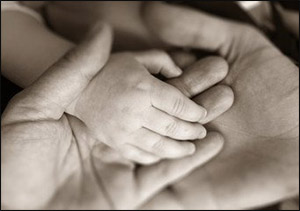
In Hebrew the word “faith” is the verbal root, “aman,” from which we get the word “amen.” “Aman” is translated as faithful or to believe. In accurate interpretations, it’s important to learn how to locate roots in Hebrew. For example, the root word for “aman” is “emunah.” “Emunah” means to support, to believe, to be steady and supported, to foster and nurse as a parent. Here we can begin to see the word-picture form in the description of “faith.”
Jesus teaches us by saying “Think NOT that I am come to destroy the law, or the prophets: I am not come to destroy, but to fulfill” (Matt. 5:17). To destroy the law means to misinterpret the Word. To fulfill the law means to correctly interpret the Word. This is a huge responsibility for all who teach the Word of God.
The Word of God tells us that “Without FAITH, it is IMPOSSIBLE to please God” (Heb. 11:6). Faith is not simply wishing for something to happen. Faith is substance (of things hoped for) and evidence (of things not seen). Faith is our total commitment to yield to our Father God, the One who supports us, establishes us and protects us as does a parent. Faith is not just believing in a Lord and God, but our 100% believing God and obedience to what He tells us.
A sign that we are operating in pure faith is that we are in a relationship with the Father, hearing and doing what He says every day, one day at a time. If we were to believe God every minute of the day, we would walk as the Messiah walked, who was successful in everything He did on the earth. If we allow the enemy to re-define definitions, words like faith would be meaningless in the scope of our being obedient to God. We might easily end up in a walk following some men’s doctrine or religious creed. Re-defining words leads to lawlessness, which results in lawless behavior. Consider what’s happening in our civilization today.
If faith comes by hearing and hearing by the WORD, then faith is not just our saying we believe in the Almighty God, but faith is our obediently acting on every Word out of His mouth. We must rely upon Him as a child relies on its parents. In both cases, obedience to righteous words keeps us from harm and leads us to prosperity.
A starting place to discover the depths of the word “faith” is in The Tanak also known as the Old Testament. For those who may not be familiar with the TaNaK, it is an acronym depicting the Old Testament.
T = Torah (law or instruction)
N= Nevieem (Prophets)
K= Ketuvim (Writings)
If you will come to OTC this Wednesday night, we will go back to the basics and discover further revelations on “faith.”